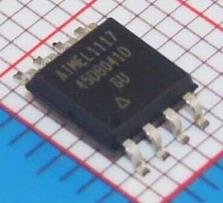
产品规格:
产品数量:
包装说明:
关 键 词:flash烧录器
行 业:电子 电子产品设计
发布时间:2022-11-20
Ready/Busy status is indicated using bit 7 of the status register. If bit 7 is a 1, then the device is
not busy and is ready to accept the next command. If bit 7 is a 0, then the device is in a busy
state. The user can continuously poll bit 7 of the status register by stopping SCK at a low level
once bit 7 has been output. The status of bit 7 will continue to be output on the SO pin, and once
the device is no longer busy, the state of SO will change from 0 to 1. There are eight operations
which can cause the device to be in a busy state: Main Memory Page to Buffer Transfer, Main
Memory Page to Buffer Compare, Buffer to Main Memory Page Program with Built-in Erase,
Buffer to Main Memory Page Program without Built-in Erase, Page Erase, Block Erase, Main
Memory Page Program, and Auto Page Rewrite.
utilized at a later time. To perform a Page Erase, an opcode of 81H must be loaded
into the device, followed by four reserved bits, 11 address bits (PA10 - PA0), and nine don’t care
bits. The 11 address bits are used to specify which page of the memory array is to be erased.
When a low-to-high transition occurs on the CS pin, the part will erase the selected page to 1s.
Page Erase
The optional Page Erase command can be used to individually erase any page in the main
memory array allowing the Buffer to Main Memory Page Program without Built-in Erase com�mand to be
The eight address bits are used to specify which block of eight pages is to be
erased. When a low-to-high transition occurs on the CS pin, the part will erase the selected
block of eight pages to 1s. The erase operation is internally self-timed and should take place in a
maximum time of tBE. During this time, the status register will indicate that the part is busy.
memory where data is to be written, and the next nine address bits (BFA8 - BFA0) select the first
byte in the buffer to be written. After all address bits are shifted in, the part will take data from the
SI pin and store it in one of the data buffers. If the end of the buffer is reached, the device will
wrap around back to the beginning of the buffer. When there is a low-to-high transition on the CS
pin, the part will first erase the selected page in main memory to all 1s and then program the
data stored in the buffer into the specified page in the main memory. Both the erase and the pro�gramming of the page are internally self-timed and should take place in a maximum of time tEP.
During this time, the status register will indicate that the part is busy.
Additional Commands
Main Memory Page to Buffer Transfer
A page of data can be transferred from the main memory to either buffer 1 or buffer 2. To start
the operation, an 8-bit opcode, 53H for buffer 1 and 55H for buffer 2, must be followed by the
four reserved bits, 11 address bits (PA10 - PA0) which specify the page in main memory that is
to be transferred, and nine don’t care bits. The CS pin must be low while toggling the SCK pin to
load the opcode, the address bits, and the don’t care bits from the SI pin. The transfer of the
page of data from the main memory to the buffer will begin when the CS pin transitions from a
low to a high state. During the transfer of a page of data (tXFR), the status register can be read to
determine whether the transfer has been completed or not.